A world-leading manufacturer of energy-efficient PSA oxygen generators & nitrogen generators


Common problems with PSA Nitrogen Generators
2026-11-10
The following are most of the questions that customers first want to know.
Q1. What is a PSA nitrogen generator, and how does it work?
A: PSA nitrogen generators use carbon molecular sieve to separate oxygen from compressed air. Two towers work alternately for adsorption and regeneration to supply nitrogen continuously.
Q2. What nitrogen purity can HUILIN Nitrogen Generators achieve?
A: Standard purity: 95%~99.999%. With deoxo unit, it can reach up to 99.9999%. Purity can be customized.
Q3. Where are HUILIN Nitrogen Generators widely used?
A: Laser cutting, lithium battery, SMT electronic welding, food packaging, metal heat treatment, chemical blanketing, pharmacy, powder metallurgy.
Q4. What inlet compressed air conditions are required?
A: Need clean, dry, oil-free compressed air. Recommended pressure: 7–10 bar. Matching filters and refrigerated dryer are required.
Q5. Can the Nitrogen Generator run 24 hours unattended?
A: Yes. Equipped with PLC + touch screen, online purity monitoring and fault alarm. Remote monitoring is optional.
Q6. What is the standard nitrogen outlet pressure? Can higher pressure be realized?
A: Standard outlet pressure: 4–6 bar, adjustable. Nitrogen booster is available for high pressure up to 15–30 bar.
Q7. What is the service life of carbon molecular sieve (CMS)?
A: Normal use for more than 10 years. Good air pretreatment and regular maintenance will extend its service life.
Q8. What are the regular maintenance items?
A: Regularly replace the air filter element, oil remover activated carbon, etc; inspect valves and pipelines; calibrate nitrogen analyzer. We provide original spare parts.
Q9. PSA Nitrogen Generator or Membrane Nitrogen Generator, which one to choose?
A: PSA fits purity ≥99.5% with stable performance. Membrane type is cost-effective for low purity. Our engineers will give professional suggestion.
Q10. What parameters are needed for model selection?
A: Nitrogen flow, purity, outlet pressure, daily working hours, local voltage and application. We provide free design.
Q11. Does higher nitrogen purity consume more power?
A: Yes. Higher purity brings higher air and power consumption. We suggest choosing proper purity to reduce operation cost.
Q12. What is the production lead time?
A: Standard models: 40–45 working days; custom units: 45–90 working days.
Q13. Do you provide overseas installation, commissioning and after-sales service?
A: We supply operation manuals, remote guidance. On-site commissioning and training can be arranged on request.
Q14. On-site nitrogen generator VS liquid nitrogen / nitrogen cylinders, what are the advantages?
A: Save gas cylinder rental, transport and refilling cost. Stable nitrogen supply, lower long-term cost and higher safety.
Contact Us
If you have more questions or need a quotation, please send your requirements to our sales team.
Related questions
1
What aspects should be paid attention to in the daily inspection and maintenance of HUILIN Nitrogen Generator?
Learn the daily inspection and maintenance items of HUILIN PSA Nitrogen Generator, ensure stable nitrogen flow and purity, and avoid unplanned shutdowns.
Q1: What daily checks should operators run on a HUILIN Nitrogen Generator?
A: Every working day, monitor the feed air pressure, nitrogen outlet pressure, nitrogen purity reading and flow rate on the control panel. Check the automatic drain valves of filters and air receivers to ensure condensed water drains normally. Visually inspect the unit for abnormal noise, loose connections or obvious air leakage. Keep the equipment room well-ventilated and maintain ambient temperature between 15–35℃.
Q2: How often should I check for air leaks on the nitrogen system?
A: Leak inspection is recommended monthly. You can use soapy liquid or an ultrasonic leak detector on pipe fittings, flanges, valve ports and tank joints. Air leaks will reduce nitrogen output, increase power consumption and cause unstable purity. Fix leaks promptly once found.
Q3: What records should we keep for daily operation?
A: We suggest recording daily data including feed air pressure, nitrogen purity, outlet flow, working temperature and alarm logs. Historical records help HUILIN engineers quickly diagnose abnormal issues and arrange targeted maintenance.
Q4: Can I clean the unit surface directly with water?
A: No. Do not spray water on the control cabinet, solenoid valves and electrical components. Wipe the cabinet and outer shell with dry or slightly damp cloth only. Keep the equipment free from dust, oil and debris.
Q5: Why are filters so important for a PSA nitrogen generator?
A: The multi-stage filtration system removes dust, water droplets, oil mist and oil vapor from compressed air. Poor filtration will cause oil and water contamination of carbon molecular sieve (CMS), leading to permanent sieve poisoning, purity drop and costly sieve replacement.
Q6: What is the replacement cycle for HUILIN filter elements?
A: The filter elements of the three levels of filters in front: replace them after 4000 operating hours; Activated carbon for degreaser: replace after 8000 operating hours. The working conditions with high dust and oil content need to shorten the cycle; Replace immediately when the pressure difference alarm is triggered.
Q7: Can I use non-original third-party filter elements for HUILIN nitrogen generators?
A: HUILIN does not recommend non-genuine filters. Off-spec filter media may fail to remove oil and moisture fully, which damages the molecular sieve and voids your equipment warranty. Please order genuine HUILIN filter spare parts.
Q8: What should I check after replacing filter elements?
A: After replacement, check the sealing of filter housings, reset the differential pressure gauge, run the system and confirm no air leakage. Monitor nitrogen purity for 1–2 hours to verify stable performance.
Q9: What is the normal service life of HUILIN carbon molecular sieve?
A: Under qualified compressed air source and standard maintenance, HUILIN carbon molecular sieve can work for more than 10 years. If the air source carries oil or excessive moisture, the sieve may fail within 2–3 years.
Q10: What signs indicate that the carbon molecular sieve is damaged or poisoned?
A: The main signs are continuous nitrogen purity decline even after filter replacement, unstable purity during load change, and increased nitrogen consumption. If these symptoms appear, contact Huilin technical support for inspection.
Q11: What maintenance is needed for adsorption towers and switching valves?
A: Check the switching solenoid valves and pneumatic valves monthly for abnormal noise, slow switching or internal leakage. The valve seals are wearing parts; replace seals regularly to maintain stable pressure switching between two adsorption towers.
Q12: What maintenance rules apply to the PLC control cabinet?
A: Keep the control cabinet dry and dust-free. Check terminal connections quarterly for looseness. Avoid frequent power cut and sudden power impact. Do not open the cabinet door in humid, dusty workshops.
Q13: What to do if the system triggers an alarm?
A: First record the alarm code and current running parameters. Check air supply, filter differential pressure and drain status. If the alarm cannot be cleared after basic inspection, stop the unit safely and contact HUILIN technical team.
Q14: How to store a HUILIN Nitrogen Generator for long-term shutdown?
A: Stop the unit following the standard shutdown sequence. Cut off power and compressed air supply. Drain all water from air receivers, filters and dryers. Seal the inlet and outlet ports to prevent dust and moisture entering the tower. Run a short test cycle every 1–2 months if possible.
Q15: What anti-freezing maintenance is required in low-temperature seasons?
A: If the ambient temperature may drop below 0℃, all water-containing parts must be fully drained to prevent pipe cracking. Keep the equipment room heated or add heat tracing for pipelines. Do not leave condensed water inside the filter and dryer.
Q16: How can I book HUILIN’s on-site maintenance service?
A: You can send the equipment nameplate, operating conditions, and on-site address to our after-sales personnel. The technical team prioritizes remote guidance and can also arrange on-site services and spare parts supply according to project progress.
If you have any questions, you can contact us: Guangzhou HUILIN Air Separation Equipment Co., Ltd. We will provide you with professional advice and serve you with sincerity.
2
What are the energy efficiency differences and core energy efficiency indicators of nitrogen generators? What is the impact of purity on energy consumption? Understand how to reduce the operating cost of on-site nitrogen production.
Energy cost is one of the biggest long-term expenses for on-site nitrogen supply. Many purchasers only compare price and rated nitrogen output when selecting nitrogen generators, ignoring energy efficiency, which results in extra electricity costs year after year.
This FAQ guide helps you properly compare PSA, membrane separation and cryogenic nitrogen generation systems. You will learn the correct energy efficiency evaluation indicators, key factors affecting power consumption, and practical methods to ensure efficient operation of your nitrogen system.
Our engineering team can provide customized energy consumption simulation and technical proposals to help you select the most energy-saving nitrogen solution that matches your process requirements.
Q: Which process delivers better energy efficiency among PSA, membrane separation and cryogenic nitrogen generation?
A: It depends on your required nitrogen purity and flow rate. Membrane nitrogen generators are generally more energy-saving within the medium and low purity range (95%–99%). When the required purity exceeds 99.5%, PSA nitrogen generators achieve better overall energy efficiency and are widely used in laser cutting, electronics and food packaging industries. Cryogenic air separation consumes far more energy and is only suitable for extra-large working conditions with stable continuous gas demand of several thousand standard cubic meters per hour. Our PSA nitrogen equipment adopts an optimized pressure equalization cycle design to reduce compressed air loss and cut specific energy consumption for nitrogen production.
Q: What are the core reference indicators for comparing the energy efficiency of nitrogen generators?
A: Do not compare only the rated power of nitrogen generators. The core evaluation criteria are the air-to-nitrogen ratio (compressed air consumption to produce 1 Nm³ nitrogen) and specific energy consumption (kWh/Nm³ nitrogen). Higher purity requires more compressed air. Comparisons must be carried out under the same nitrogen output, purity, outlet pressure and ambient conditions. Two nitrogen generators marked with the same output may have an actual energy consumption gap of 20%–40% if their air-to-nitrogen ratios differ.
Q: Why is there a big gap in actual energy consumption between two PSA nitrogen generators with the same labeled parameters?
A: Many factors affect real energy efficiency: quality of carbon molecular sieve, valve switching logic, pressure equalization recovery structure, pipeline pressure drop and the performance of the front air pretreatment system. Poor pretreatment (oil, water and dust contamination) will gradually pollute the molecular sieve and increase air consumption year by year. High-end models are equipped with PLC adaptive sequence control, which automatically adjusts the adsorption cycle according to real-time gas demand to save energy under low-load conditions. HUILIN energy-saving PSA nitrogen systems support load-following regulation to avoid energy waste during low gas consumption periods.
Q: Will nitrogen purity requirements significantly affect the power consumption of on-site nitrogen generators?
A: Yes. Purity is one of the primary factors determining operating costs. Raising purity from 99.9% to 99.999% may increase compressed air consumption by 50% or more. Many customers unnecessarily select an excessively high purity during model selection and incur avoidable monthly electricity bills. We recommend matching nitrogen purity strictly to your production process. Our team can simulate energy consumption under different purity schemes to help you select the configuration with the best cost performance.
Q: What measures can we take to maintain high energy efficiency of nitrogen generators in the long run?
A:
- Maintain dryers and filters regularly to protect carbon molecular sieve;
- Check compressed air leakage in pipelines periodically;
- Avoid excessive inlet pressure and overpressure of the nitrogen storage tank;
- Calibrate purity analyzers and flow meters on schedule;
- Prioritize models with energy-saving mode and compatibility with variable frequency air compressors.
Guangzhou HUILIN Air Separation Equipment Co., Ltd. can provide complete operation and maintenance guidance. Remote monitoring function is optional to ensure the equipment maintains low energy consumption stably throughout its lifecycle.
If you need energy consumption simulation or a customized quotation for your nitrogen project, please provide the required nitrogen flow rate, purity and daily operating hours. Our engineers will design a low-energy nitrogen generation solution for you. Feel free to contact us anytime!
3
Which Nitrogen Generator Manufacturer is Better? | How to Select a Reliable Nitrogen Generator Manufacturer
Which nitrogen generator manufacturer is better? When comparing suppliers, focus on the following:
Q: Which nitrogen generator manufacturer is better? What are the top priorities when purchasing a nitrogen generator?
A: There is no absolute best nitrogen generator brand; only reliable manufacturers that match your working conditions. Give priority to confirming four core parameters during model‑selection: nitrogen purity, gas output, supply pressure and operating environment. Next, check whether the supplier is an original air‑separation manufacturer that masters core PSA technology, has practical industry application cases, and possesses complete system supporting capability and after‑sales service system. Guangzhou HUILIN Air Separation specializes in the R&D and manufacturing of PSA nitrogen‑generating equipment. We provide customized solutions for industries including electronics, lithium‑battery, food, chemical, oil‑gas and heat‑treatment sectors. We deliver one‑stop services covering solution design, production, commissioning and operation‑maintenance. Both standard models and non‑standard custom units such as skid‑mounted and container‑type generators are available.
Q: How to tell whether a nitrogen generator supplier is an OEM reseller or a small‑scale workshop?
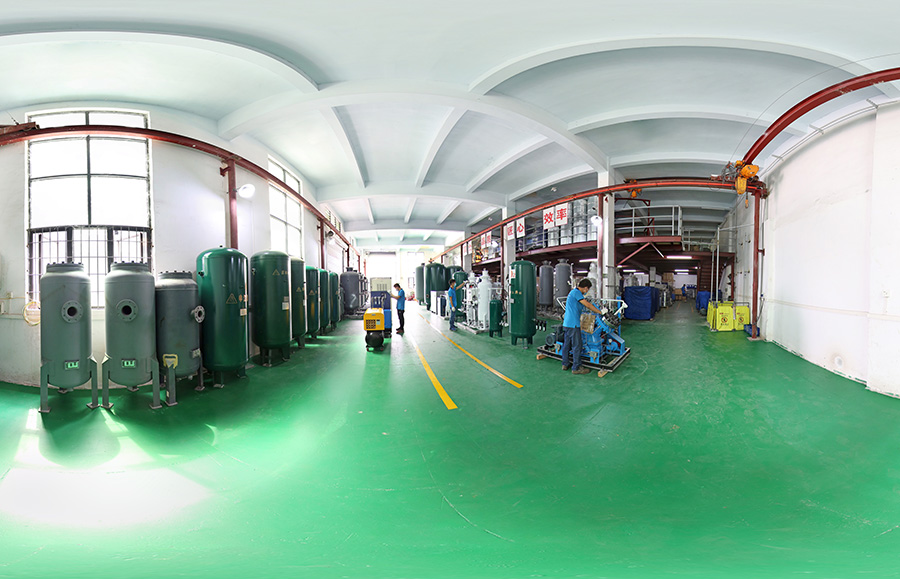
A: Genuine original manufacturers own independent workshops for design, assembly and testing, hold relevant air‑separation qualifications and patents, and implement complete testing procedures. They can offer site surveys, construction drawings, factory inspection reports and on‑site commissioning services.OEM resellers usually only perform simple assembly without in‑house technical teams. Their products commonly suffer from falsely marked parameters, poor‑quality carbon molecular sieves, unstable nitrogen purity and unresponsive after‑sales support. HUILIN Air Separation operates its own production base with strictly‑selected core components. Every unit undergoes 72‑hour joint commissioning tests before delivery, and all project files are traceable. A large number of long‑term running projects at home and abroad are available for site visits.
Q: What is the key component that determines nitrogen generator performance?
A: For PSA nitrogen generators, the critical components are carbon molecular sieves, adsorption tower structure, pneumatic valves and control system. High‑quality molecular sieves resist pulverization and deliver stable adsorption performance. Adsorption towers equipped with compression structures prevent molecular sieve channeling and pulverization. Reliable solenoid valves together with PLC and online oxygen analyzers guarantee stable nitrogen purity over long‑term operation. Low‑cost equipment often omits online oxygen analyzers and simplifies compression structures. Such units may work in the short run but feature high failure rates and surging operation‑maintenance costs later. HUILIN nitrogen generators come standard with online oxygen monitoring and molecular‑sieve compression systems, as well as complete pre‑purification systems to protect molecular sieves from oil and water contaminants and extend equipment service life.
Q: How important is after‑sales service when choosing a nitrogen generator manufacturer? What does standard after‑sales service cover?
A: After‑sales service is extremely important. Nitrogen generators mostly run 24/7 continuously; unexpected shutdowns will directly disrupt production lines. Premium‑manufacturer after‑sales packages typically include pre‑sale working‑condition surveys, installation guidance, on‑site commissioning, operator training, regular follow‑ups, rapid fault response, spare‑parts supply and annual maintenance plans. HUILIN Air Separation provides remote diagnosis, remote technical guidance and on‑site support. Free technical assistance is offered within the warranty period. Annual maintenance contracts are also available after warranty expiry to sustain stable gas supply.
HUILIN Air Separation is a professional manufacturer of pressure‑swing‑adsorption nitrogen generators and nitrogen purification equipment. We provide global customers with one‑stop services including solution design, production, testing and installation guidance as well as after‑sales support. Equipment can be customized to match different voltages, frequencies and standards for Europe, Southeast Asia, the Middle East and other regions.
Please share your required nitrogen purity, flow rate, pressure and industry sector, and our engineering team will provide you with tailored technical proposals and quotations.
Contact: huilin@world‑gas.cn | Tel: +86 13724819737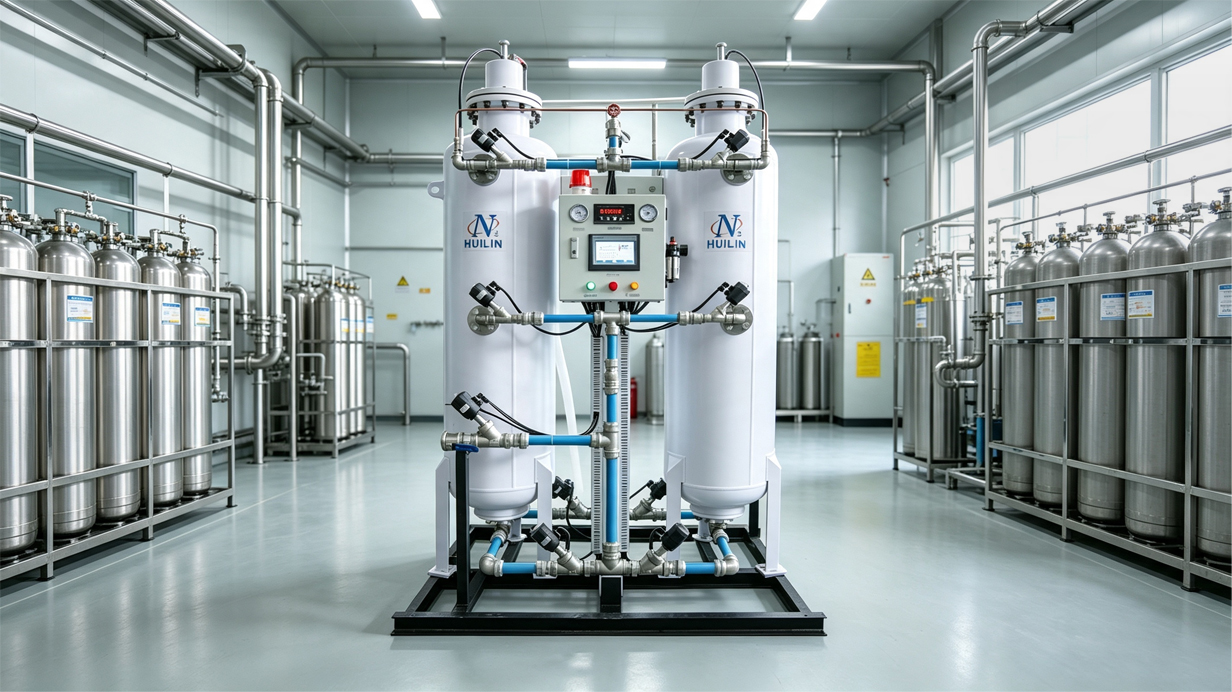
4
How to Select a Nitrogen Generator Manufacturer?
What aspects should customers refer to when choosing a nitrogen generator manufacturer? Please reference the points below:
- What should be confirmed first when selecting a nitrogen generator manufacturer? Priority should be given to verifying whether the manufacturer is an original equipment producer rather than a trading intermediary. Intermediaries do not possess production workshops or factory‑testing capabilities, nor do they master core technologies. This will lead to disadvantages in later‑stage fault handling and equipment upgrading. Original manufacturers support on‑site inspections of production, assembly and complete‑machine testing procedures. Guangzhou HUILIN Air Separation Equipment Co., Ltd. owns its production base and specializes in the R&D and manufacturing of PSA nitrogen generators. Every unit undergoes full‑performance testing before delivery.
- What should be reviewed regarding industry cases when assessing a nitrogen generator manufacturer? Focus on real‑world projects within your industry with comparable nitrogen purity and flow rate. Prefer cases with long‑term continuous production. You may enquire about project service years and energy consumption data. On‑site or online follow‑ups with existing clients are recommended when necessary. With over ten‑year expertise in nitrogen generation, HUILIN provides services for enterprises including BYD, Sinopec, Wuhan Iron and Steel, and Livzon Pharmaceutical. Its nitrogen‑generation equipment has been exported to over 70 countries worldwide. Thousands of units run reliably across new‑energy, chemical, metallurgical, food and pharmaceutical sectors. Relevant industry references can be provided.
- Which core components of nitrogen generators directly affect service life and operational stability? Five key components: carbon molecular sieve, adsorption tower, special pneumatic valves, PLC control system, and front‑end air filtration and drying system. The quality of carbon molecular sieve and its filling process determine nitrogen‑gas purity and service life. Valves perform frequent switching; low‑quality valves tend to leak and cause purity fluctuations. HUILIN develops in‑house gas‑flow distribution and molecular‑sieve compression technologies. High‑grade carbon molecular sieves are adopted to produce high‑purity nitrogen up to 99.9995% in one pass. The fully‑automatic PLC control system is equipped with on‑line purity monitoring and unqualified‑gas protection functions.
- Is it sufficient to only compare quotations when sourcing nitrogen generators? No. Nitrogen generators run continuously for long periods. Purchase price alone should not be the benchmark; full‑life‑cycle costs shall be calculated. Low‑cost proposals usually cut corners on molecular sieves, valves and filters, resulting in high energy consumption, frequent breakdowns and elevated operation‑and‑maintenance costs. When comparing quotations, unify working conditions, and make comparisons on gas output flow rate, purity, air consumption, brands of core accessories, warranty terms, installation & commissioning, and spare‑parts lists. HUILIN offers complete turn‑key proposals with transparent configuration lists. Solutions balance equipment stability and energy efficiency, delivering 10%‑20% energy savings compared with similar products.
- How to evaluate a manufacturer’s capability for customized nitrogen‑generator solutions? Customized solutions are required in scenarios such as limited on‑site space, fluctuating gas consumption, or strict standards for explosion‑proof performance / food‑pharmaceutical cleanliness. Reliable manufacturers collect complete operating parameters in advance: nitrogen flow rate, purity, pressure, running hours, air‑source conditions, site dimensions and industrial specifications, before formulating formal proposals. HUILIN supplies standard skid‑mounted and container‑type nitrogen generator sets. Stainless‑steel pipelines and multi‑stage filtration are applied for food‑pharmaceutical projects; explosion‑proof solutions are tailored for chemical and new‑energy projects, complying with domestic and overseas project standards.
- What after‑sales capabilities should be prioritized for nitrogen generators? Nitrogen generators usually operate 24/7. Unexpected shutdowns will directly disrupt production lines. Three dimensions deserve close attention: after‑sales response speed, spare‑parts inventory, and technical team competence. Services cover installation & commissioning, operator training, remote diagnosis, regular inspection, emergency repair, and consumable supply. HUILIN delivers nationwide technical services. For overseas projects, English‑language technical documents and remote commissioning guidance are available. Core spare parts are kept in stock; consumables are fairly priced. Full‑life‑cycle technical support is provided, with no mandatory maintenance packages after warranty expiration.
- Is gas‑supply margin advisable for nitrogen‑generator procurement? A 20%‑30% margin is suggested. Production expansion, gas‑consumption fluctuation and air‑source environment changes will influence actual gas output. HUILIN technical engineers will set reasonable design margins based on your working‑condition fluctuations to avoid insufficient gas supply for production lines in later operation.


GET IN TOUCH WITH Us
HUILIN Co. is a company specializing in the production, research and development, sales and service of PSA oxygen generators and nitrogen generators. The address of HUILIN Company is located in Guangzhou, China.
Contact Us
Tel: +86 13724819737
E-mail: huilin@world-gas.cn
Add: B101 building No160 Gandong street Donghuan Panyu District, Guangzhou, Guangdong, China
Contact us
Leave your inquiry, we will provide you with quality products and services!
Contact us
wechat
whatsapp
Contact customer service
Contact us
wechat
whatsapp
cancel
Customer service